

Balcony Door Water Leaks in Sydney: Causes, Signs & Leak Detection
Coastal and ocean-facing properties in Sydney can be particularly exposed to wind-driven rain and water ingress around balcony doors and aluminium window frames.
A balcony door may appear properly sealed from the outside, while water is actually entering through deteriorated sealant, gaps around the frame, inadequate sill drainage or compromised flashing and then travelling underneath the flooring.
In some cases, the first visible sign is not water around the door itself. Instead, homeowners may notice swollen, lifted or uneven floorboards near the balcony entrance.
How can water enter through a balcony door?
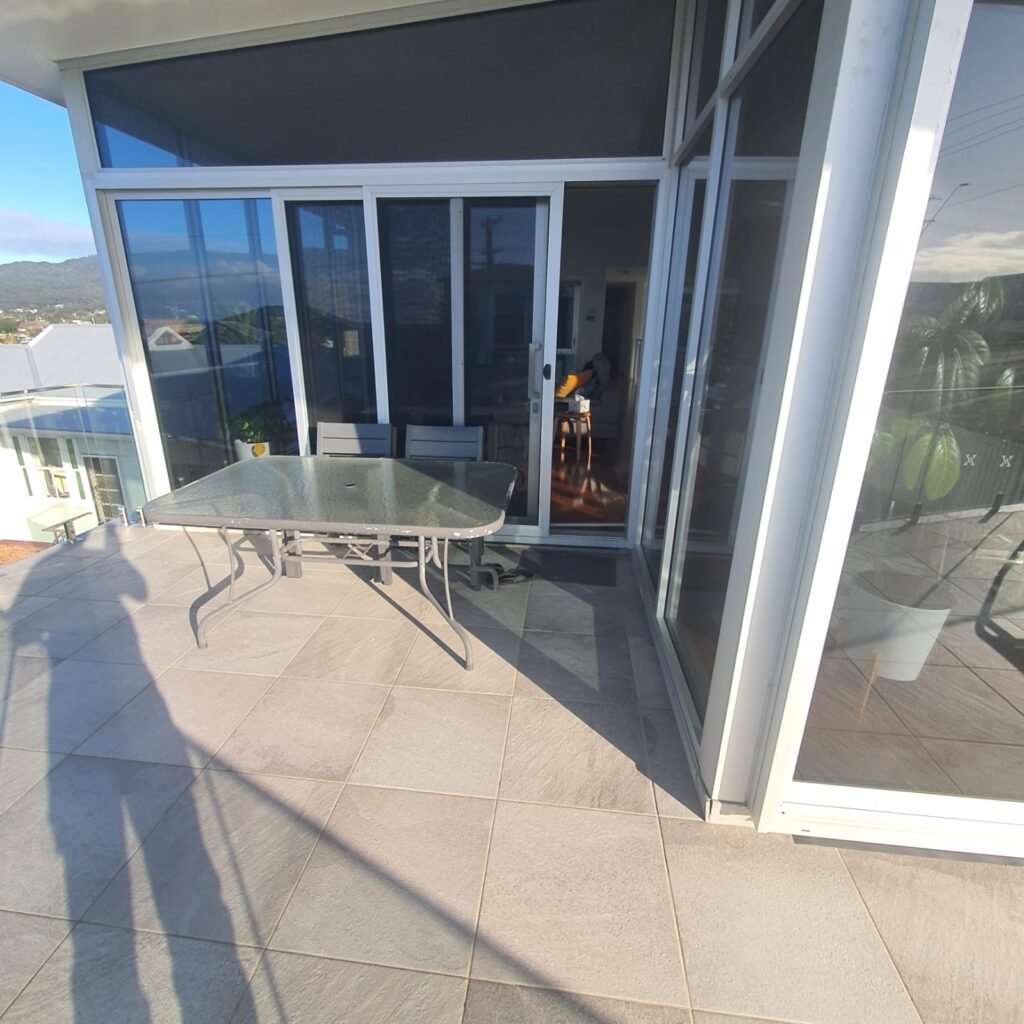
Balcony doors and aluminium frames are exposed to repeated weather conditions, including rain, wind and direct sunlight. Over time, sealants and other waterproofing components can deteriorate.
Potential entry points can include:
- Deteriorated sealant around the aluminium frame
- Gaps or failed seals around the base of the frame
- Inadequate sill drainage
- Blocked or ineffective drainage paths
- Water pooling around the door track
- Defective waterproofing around the balcony
- Wind-driven rain entering around the frame
During heavy or wind-driven rain, water can be forced into small gaps that may not become obvious during normal conditions.
Once water gets beneath the frame or flooring, it can remain hidden and potentially cause damage over time.
Balcony Sliding Doors & Water Ingress
Sliding door frames are a common source of water ingress around balconies, particularly when the sill and waterproofing details are not correctly installed.
A properly installed sliding door system should include weep holes or drainage openings at the bottom of the frame. These allow rainwater entering the door track to drain safely back outside. If these openings become blocked or sealed, water can build up and potentially enter the property.
A sub-sill flashing beneath the door frame provides an additional layer of protection by collecting water and directing it towards the exterior. The balcony waterproofing membrane should also be correctly terminated and integrated with the door sill, waterstop and surrounding waterproofing.
Common issues we find include:
- Blocked or missing weep holes
- Missing or poorly installed sub-sill flashing
- Incorrect membrane termination
- Failed sealant around the frame
- Poor balcony falls or ponding against the door
- Gaps around door jambs and sill corners
Simply applying silicone around a leaking sliding door may not address the underlying problem. The door frame, sub-sill, weep holes, waterproofing membrane and balcony drainage should work together as one complete system to prevent water ingress.
During leak detection, these areas can be assessed using visual inspection, controlled spray testing and thermal imaging to help identify the source and pathway of water ingress.
Identifying the actual entry point is important because water can travel through concealed areas before appearing inside the property, meaning the location where water becomes visible may not be the location where it entered.
Case Study: Tracing Water Ingress Through a Balcony Door Frame
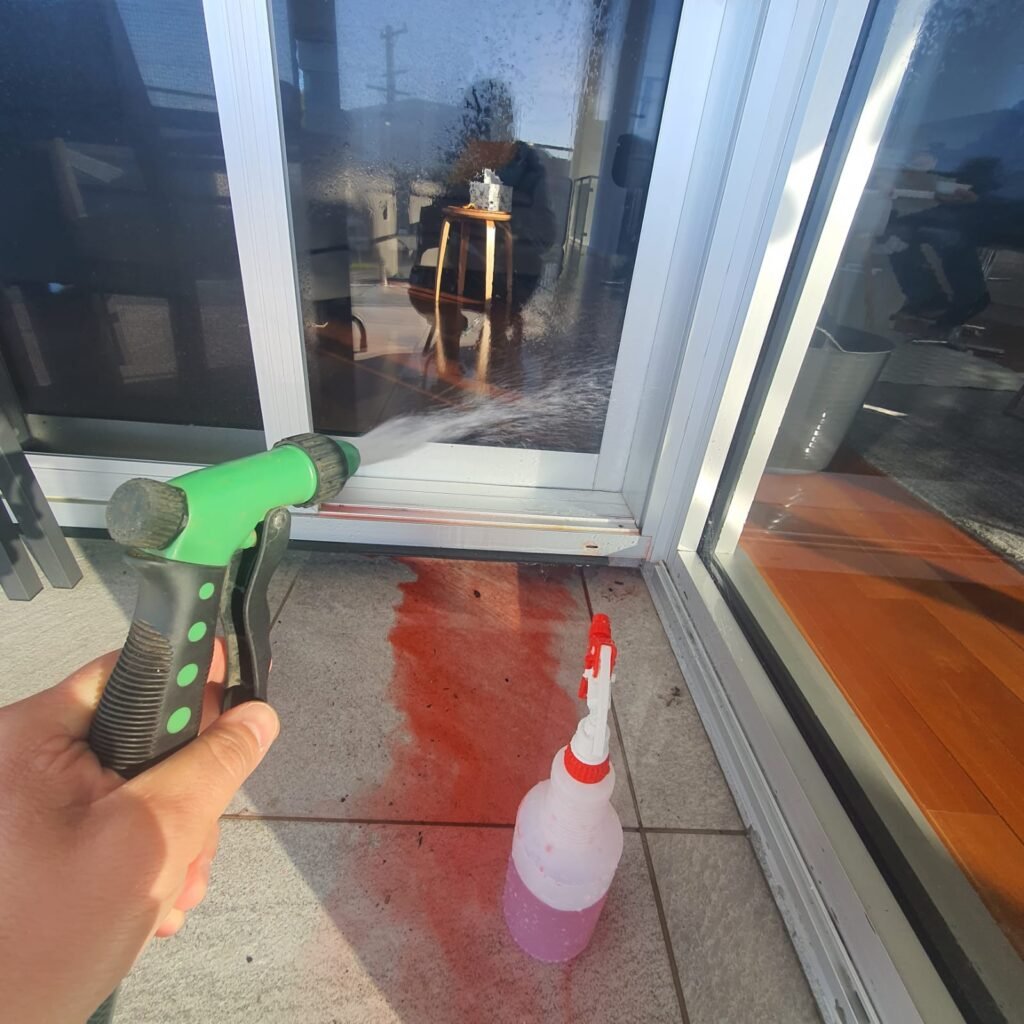
In this Sydney property, the balcony area included large glazed doors and aluminium framing that was exposed to external weather conditions.
The investigation focused on determining whether water could enter through the balcony door frame and travel into the internal living area.
A controlled spray test using tracer dye was carried out around the balcony frame.
The coloured dye provided a visual indication of the water pathway during testing and helped trace the suspected entry point at the base of the aluminium frame and door track area.
This type of testing can be useful when the visible water damage inside the property does not clearly identify where the water is entering.
What did the investigation reveal?
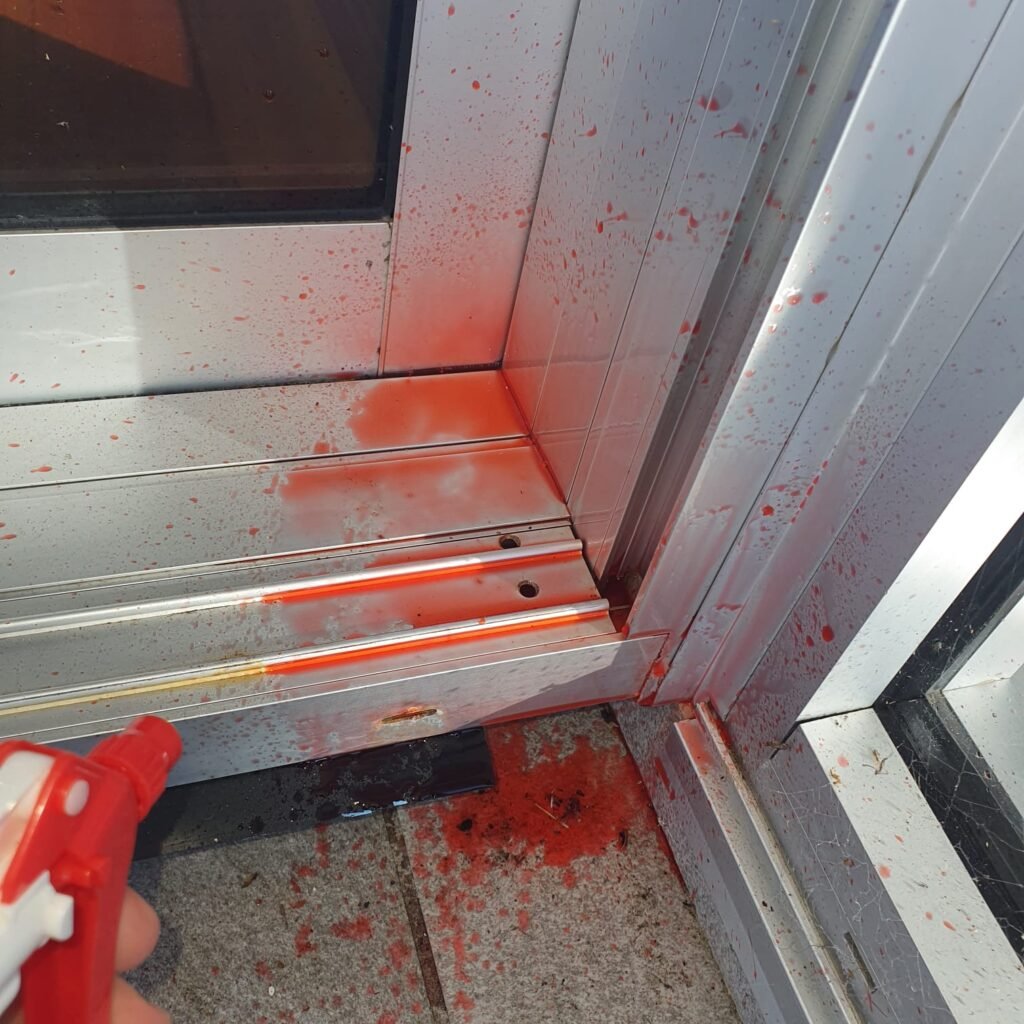
The testing indicated water ingress through the lower section of the aluminium frame.
The affected area was close to the transition between the external balcony and the internal timber flooring.
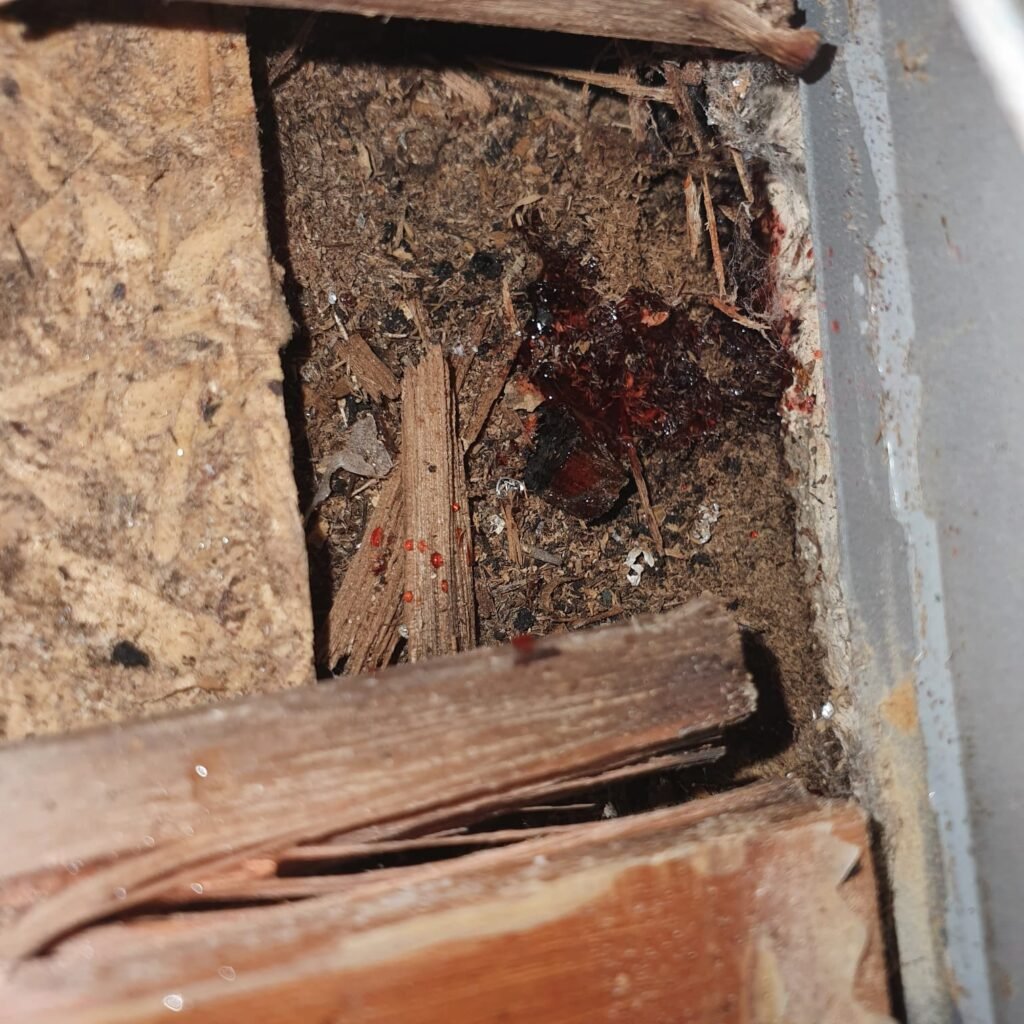
The investigation also identified evidence of moisture-related deterioration beneath the flooring.
This demonstrates why a visible patch of damaged flooring does not necessarily mean the problem originates directly underneath that particular area.
Water can enter at one location, travel beneath a frame or flooring system and appear somewhere else.
Can a Balcony Door Leak Damage Floorboards?
Yes. Repeated or prolonged water ingress can affect timber flooring and other building materials.
Depending on the amount and duration of moisture exposure, homeowners may notice:
- Swollen floorboards
- Lifted or uneven boards
- Gaps between flooring boards
- Discolouration
- Damp or musty smells
- Deterioration beneath the flooring
- Moisture around the balcony door track
- Water appearing after rain
In the property shown in this investigation, the timber flooring near the balcony doors showed lifting and unevenness, consistent with prolonged exposure to moisture.
Once flooring begins to change shape, simply drying the visible surface may not address the underlying source of the water.
Why Is Professional Leak Detection Important?
Finding the source of water ingress is different from finding the area where water damage is visible.
A visual inspection may identify damaged flooring, staining or moisture, but it may not establish the exact entry point.
Professional leak detection can involve controlled testing of suspected areas to help determine:
- Where is the water entering?
- How is it travelling?
- Is the balcony door frame involved?
- Could the issue be related to seals, drainage or waterproofing?
Identifying the source can help property owners and building professionals determine the appropriate repair strategy rather than simply treating the visible damage.
Signs You May Have a Balcony Door Water Leak
If your property has balcony doors or large aluminium-framed windows, look for these warning signs:
1. Lifted or uneven floorboards
Floorboards that are beginning to swell, lift or become uneven near a balcony door should be investigated.
2. Water after rainfall
If water appears near the balcony door following heavy rain, particularly during windy weather, water ingress should be considered.
3. Moisture around the door track
Water collecting around the lower door track may indicate an issue with drainage, seals or the frame.
4. Damaged or deteriorated sealant
Cracked, separated or deteriorated sealant around the aluminium frame can provide a potential pathway for water.
5. Repeated unexplained water damage
If flooring or internal finishes repeatedly become damaged despite cleaning and drying, the underlying source should be investigated.
Coastal Properties Can Be More Exposed to Wind-Driven Rain
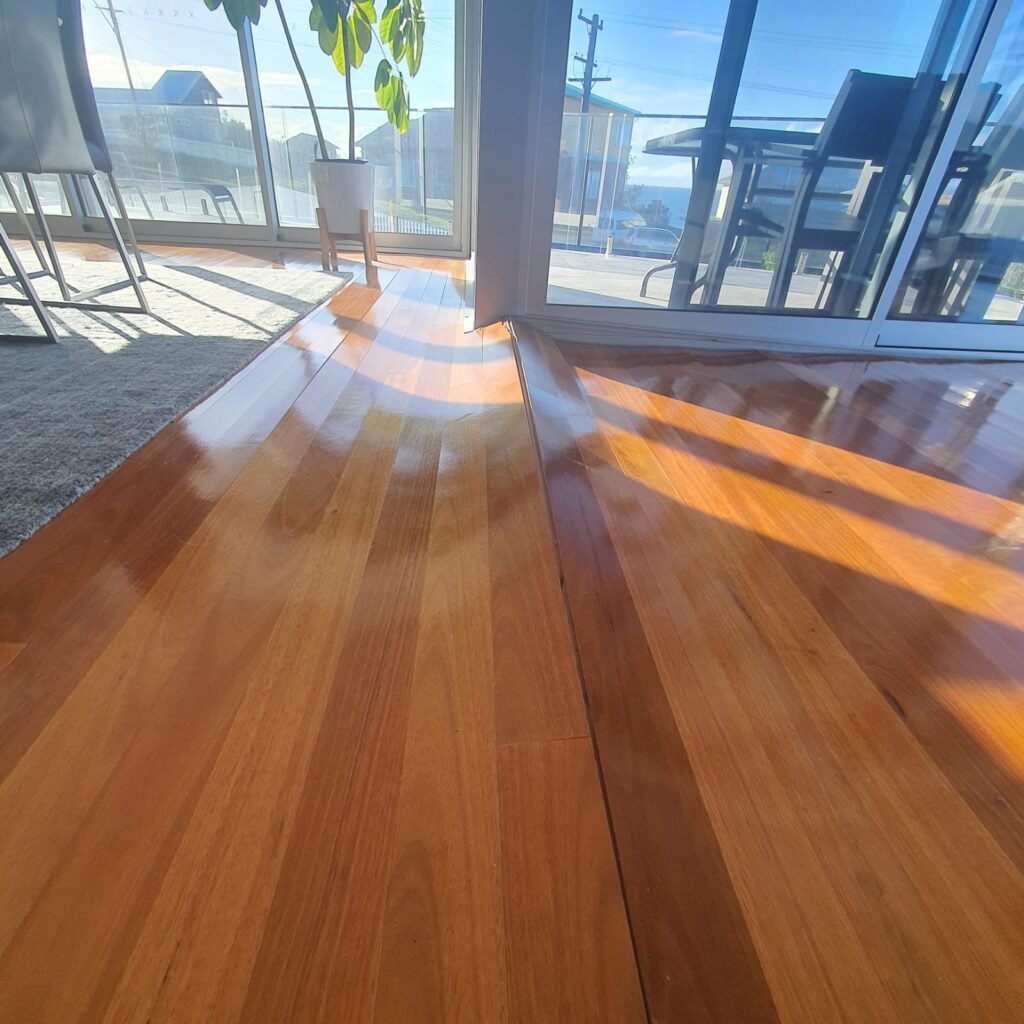
Properties located near the coast can experience greater exposure to weather conditions.
Wind-driven rain can be pushed against doors, windows and external frames from different directions, increasing the opportunity for water to enter through small defects or compromised seals.
This is why balcony doors and large glazed openings should be properly inspected when unexplained water ingress occurs.
Don’t Ignore Lifted Floorboards Near a Balcony Door
If you notice lifted, swollen or uneven floorboards next to your balcony doors, don’t assume that replacing the flooring will solve the problem.
The visible flooring damage may be a symptom of water entering through another location.
Finding the source of the water ingress first can help prevent the same problem from continuing after repairs.
If you suspect water is entering through your balcony door or aluminium frame, arrange a professional leak investigation.
Leak Detector Sydney provides professional water leak detection services across Sydney.