For Strata Managers, Committees & Owners Corporations
Water leaks in strata buildings rarely show up where they start. A stain on one owner’s ceiling can trace back to a roof membrane, a lift shaft, a balcony upstand, or a pipe run three floors away. We work with strata managers, building committees and owners corporations across Sydney to find the real source the first time — with reporting that holds up for insurance claims, AGMs, and contractor scopes of work.
Multi-Unit Building Specialists
Non-Invasive First, Every Time
Committee & Insurer-Ready Reports
All Sydney Suburbs Covered
Common Property
Common Areas We Investigate
From basement to roofline, we trace water ingress across every shared element of a strata building.
Basement Car Parks & Storerooms
Roofs, Membranes & Parapets
Lift Shafts & Stairwells
Balconies, Upstands & Membranes
Common Bathrooms & Wet Areas
Shared Plumbing Risers & Pipe Runs
External Cladding & Render
Not sure where it's coming from?
That's exactly what we're for → book an inspection
The Difference
Why Strata Managers & Committees Choose Us
Finds Leaks Others Miss
Deep experience diagnosing water ingress in multi-unit buildings — including long-running issues previous contractors couldn't resolve.
Non-Invasive First
Acoustic, tracer gas, thermal imaging, concrete moisture meters and drone inspection for height-restricted areas — before any invasive work is considered.
Committee-Ready Reporting
Clear, photo- and video-backed reports suitable for AGM discussion, insurance claims, and contractor tender scopes.
Insurer-Aligned Process
Reports are structured to support strata insurance claims, reducing back-and-forth with the insurer or loss adjuster.
Ongoing Relationship
Not one-off callouts — many buildings use us as their go-to leak diagnostic provider for repeat or recurring issues.
One source. One report. One trusted contact.
Give your committee a diagnostic partner who documents the root cause and stands behind the findings at the AGM and with the insurer.
Diagnostic Technology
Evidence Your Committee & Insurer Can Trust
Thermal imaging, tracer testing and moisture mapping capture the leak at its source — the same imagery attached to your report.
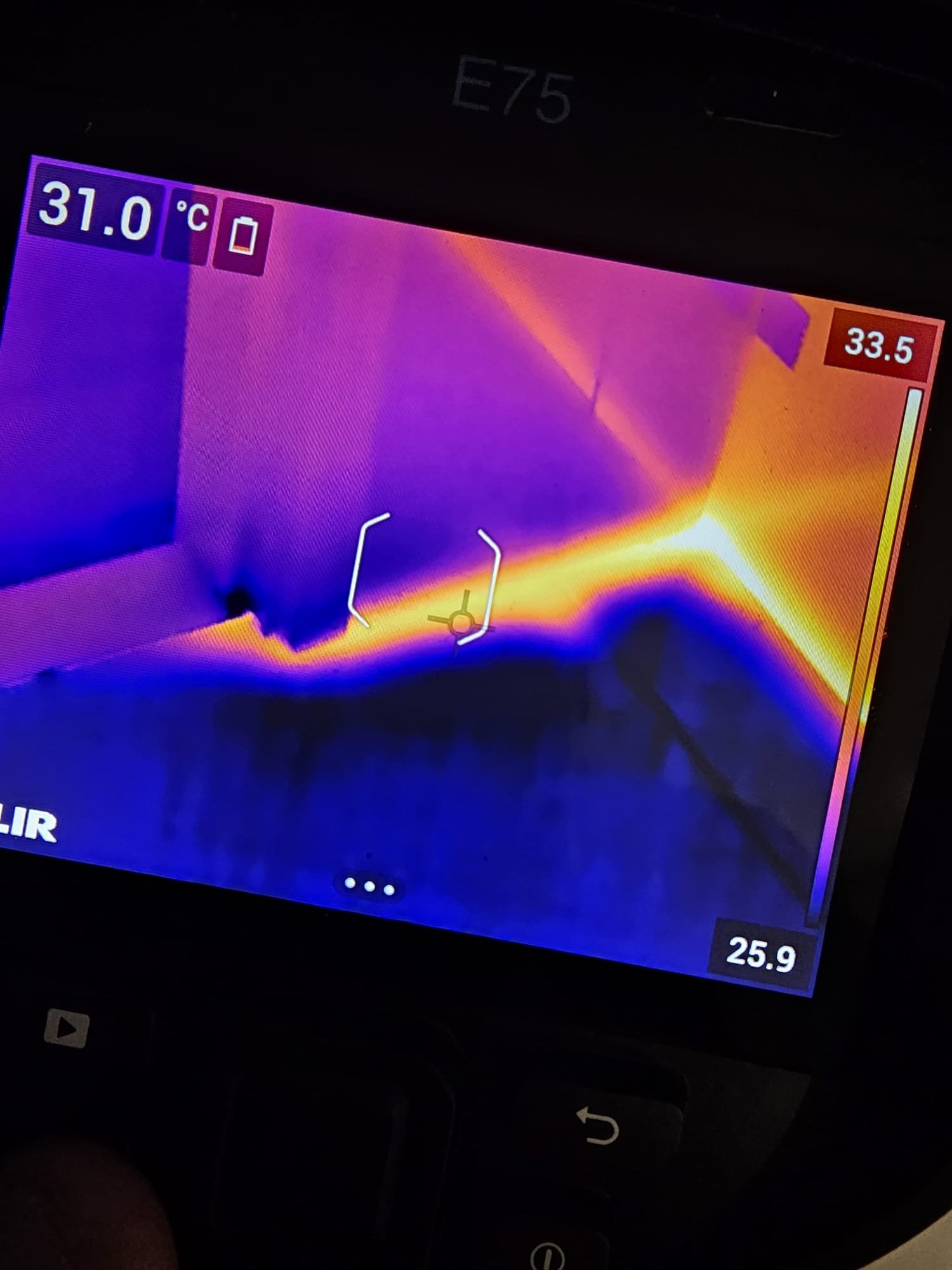
Thermal Signature — Concealed Ingress
A FLIR thermal capture revealing the cool moisture plume of an active leak behind common-property wall lining — located without opening the fabric.
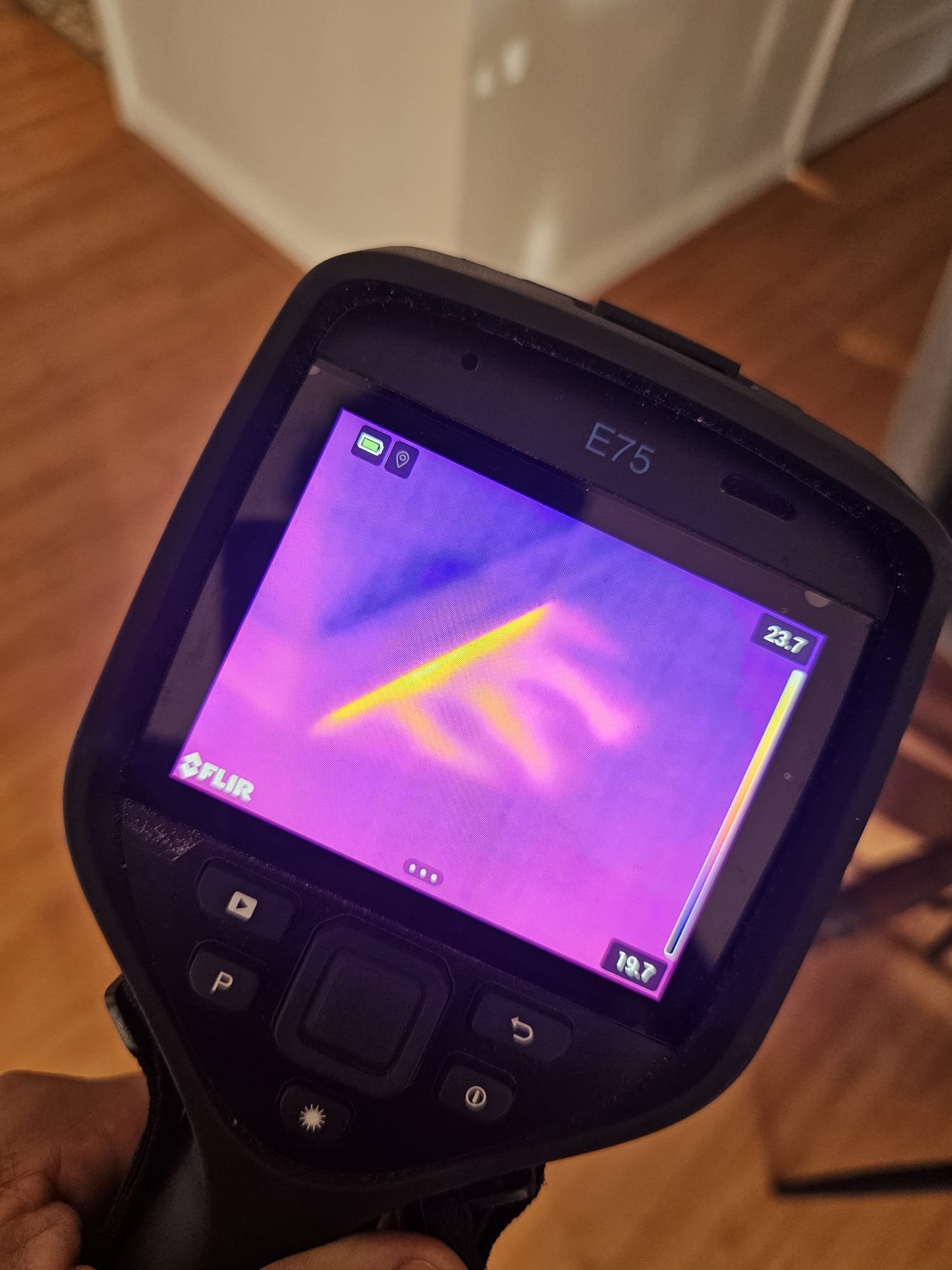
Ceiling & Slab Moisture Mapping
Scanning a unit ceiling to trace how far water has travelled between floors — critical for identifying which common element is the true source.
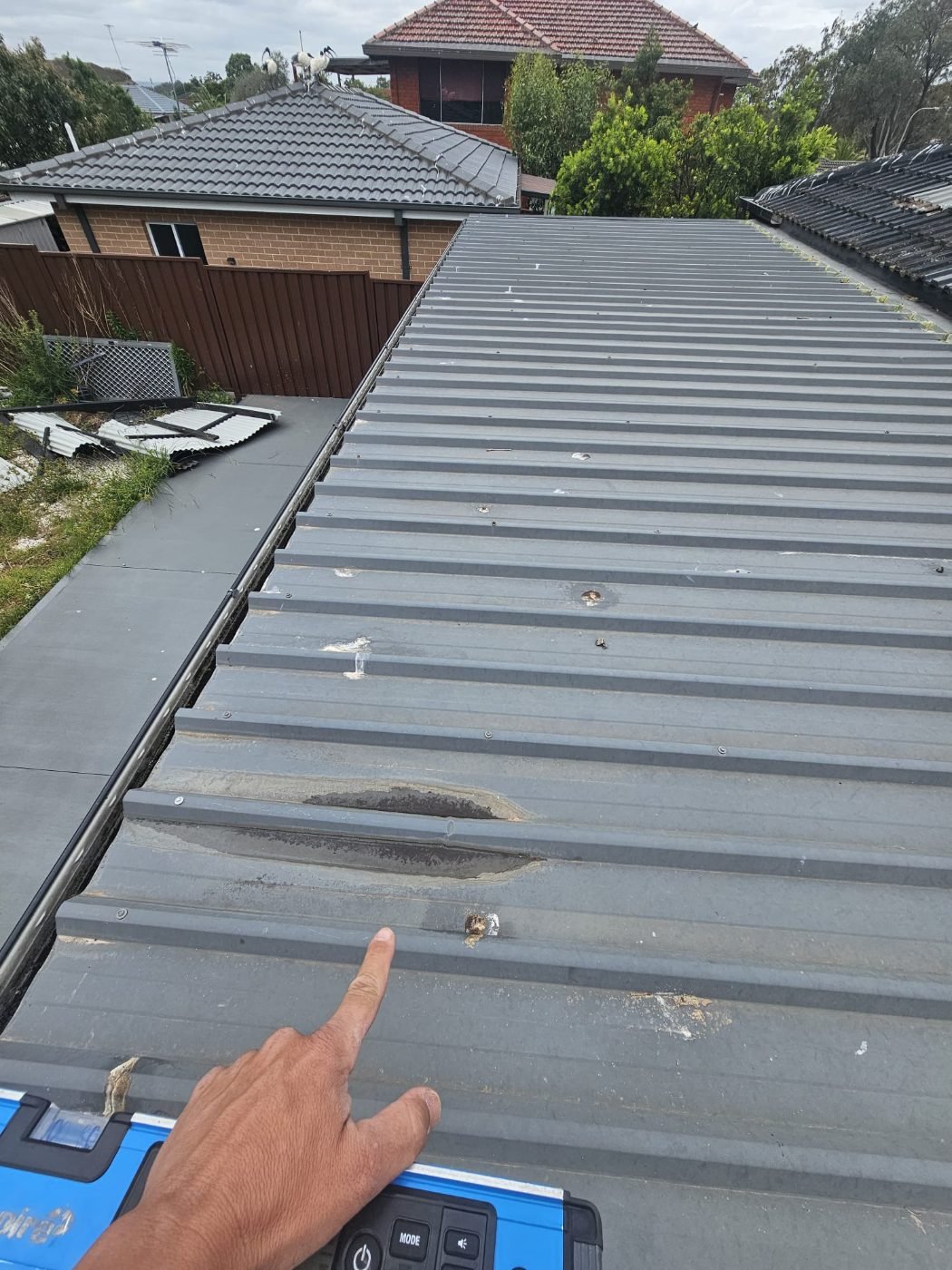
Roof & Membrane Investigation
Large-span strata roof with multiple defect points — torn membrane, failed fasteners and open penetrations documented across the full footprint
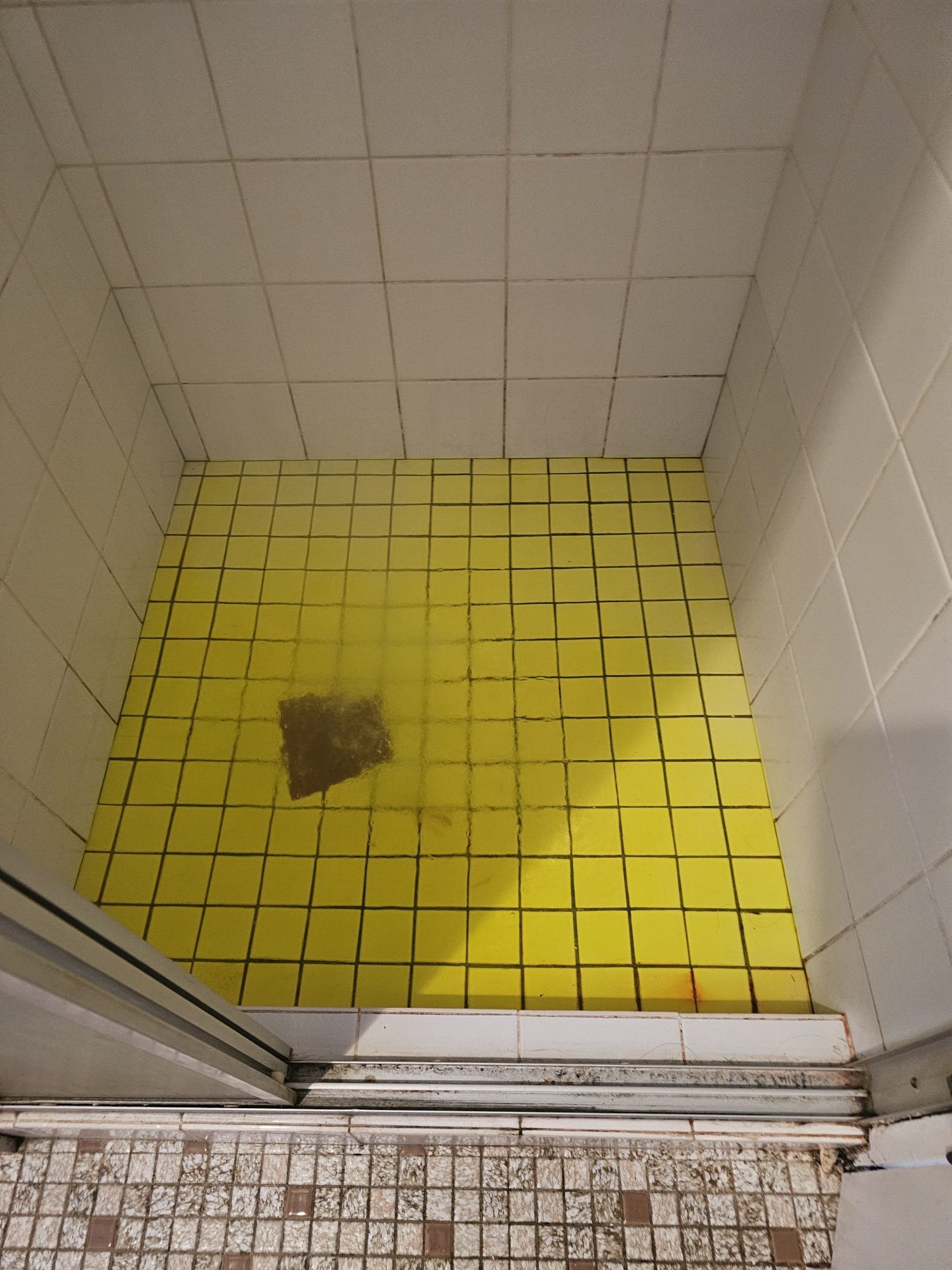
Wet-Area Waterproofing Test
Tracer testing on a common-area shower base to confirm a waterproofing failure — a frequent source of inter-unit strata disputes.
Documented to the standard an AGM, insurer and builder all demand.
Thermal images, video, moisture readings, leak location, root cause and a recommended remediation approach — one report that supports the claim, the committee decision and the contractor brief.
On-Site, Real Buildings
Strata Thermal Imaging & Leak Detection in Action
A recent multi-unit inspection — from facade staining to thermal diagnosis and tracer testing at the source.
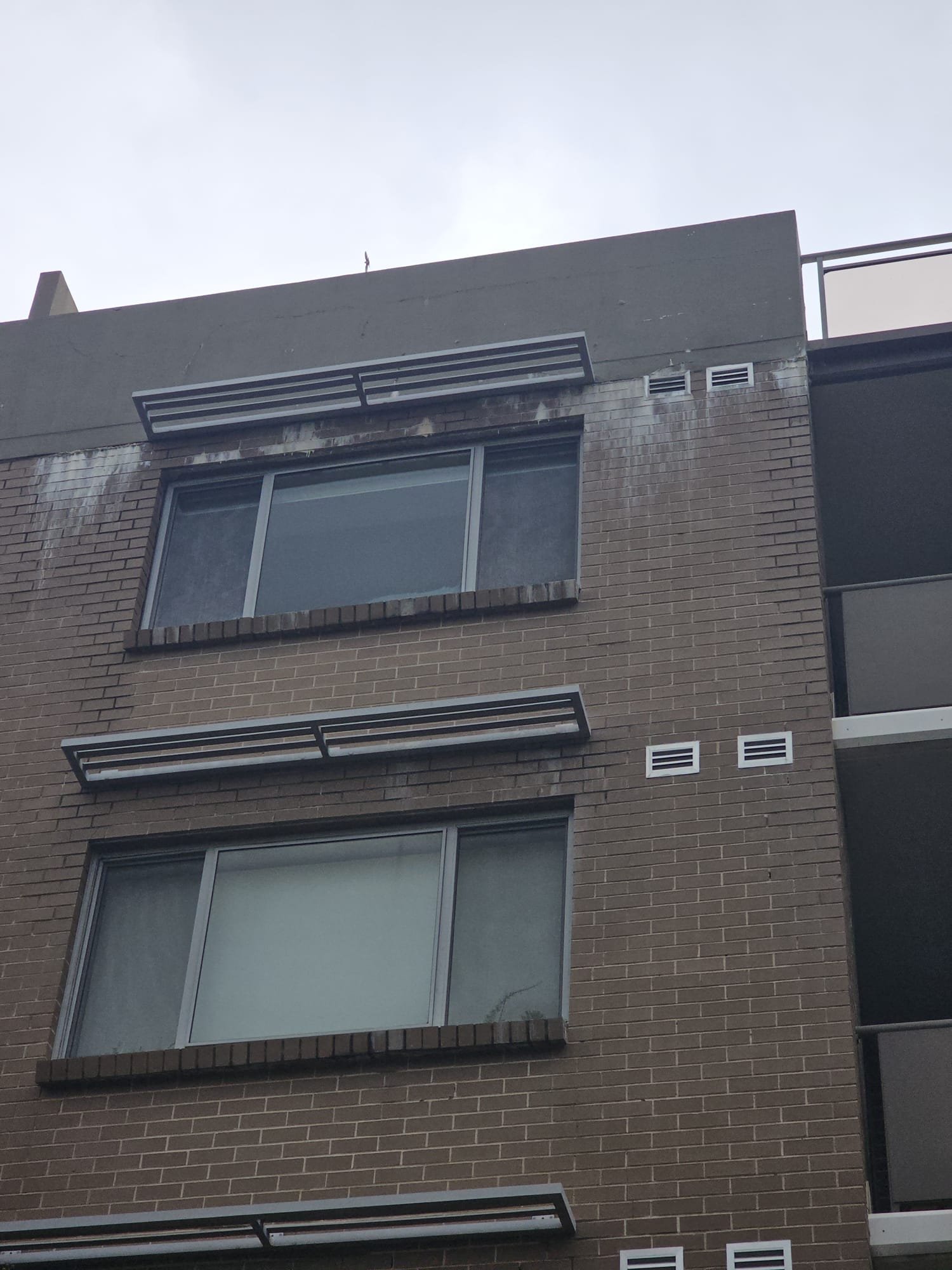
Facade Staining Below Window Vents
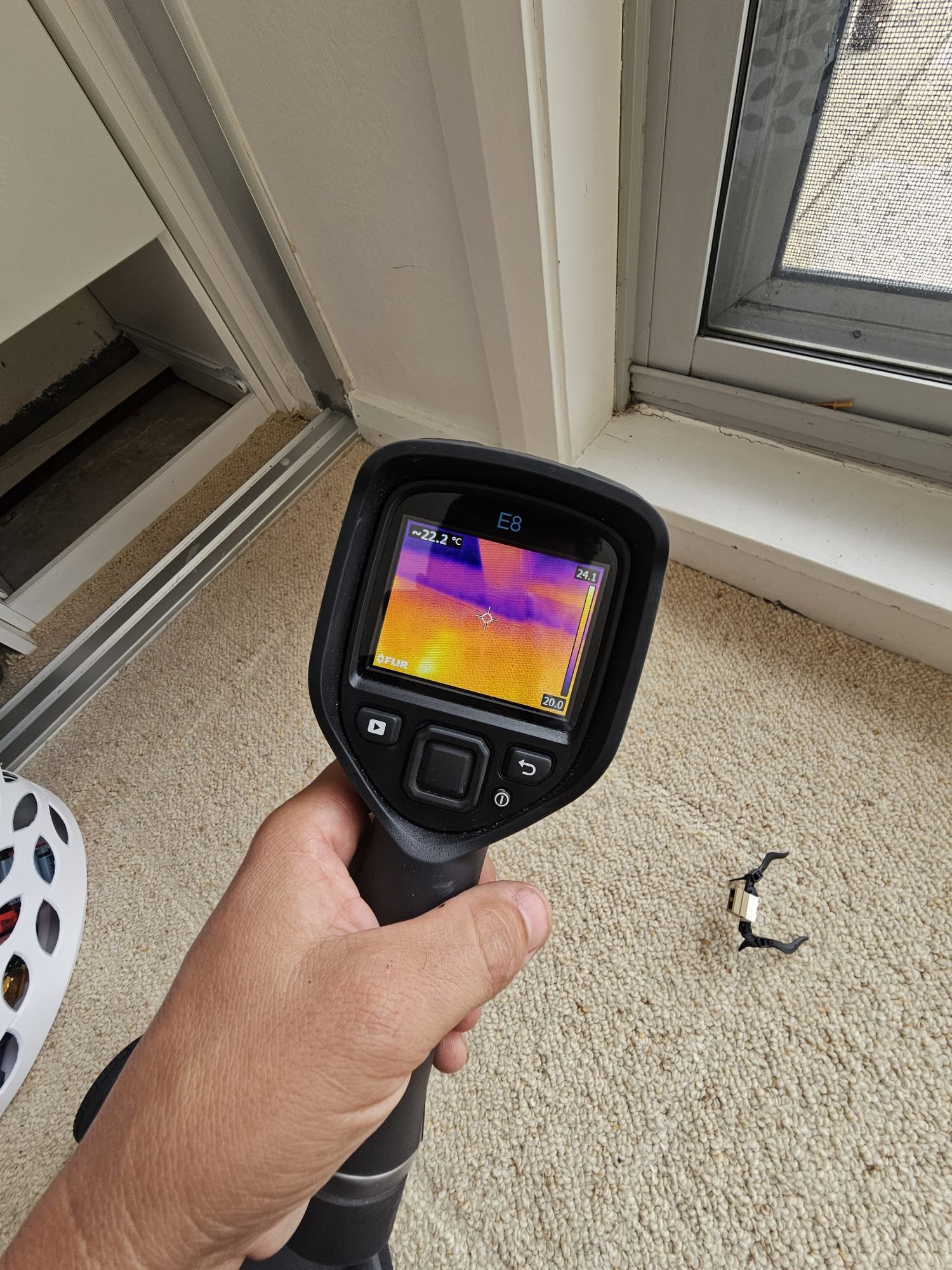
FLIR Reading at the Suspected Source
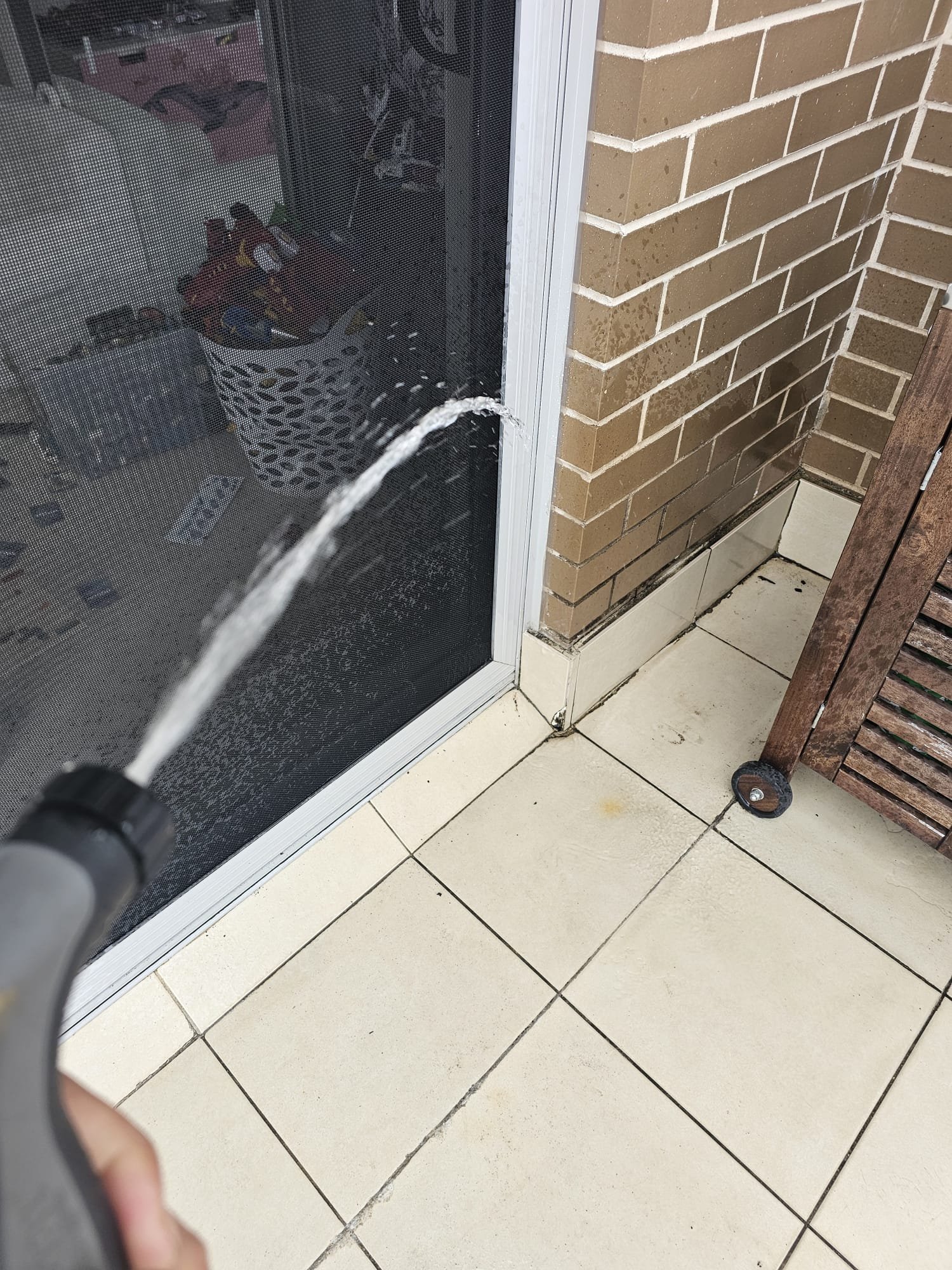
Tracer Testing the Balcony Door Junction
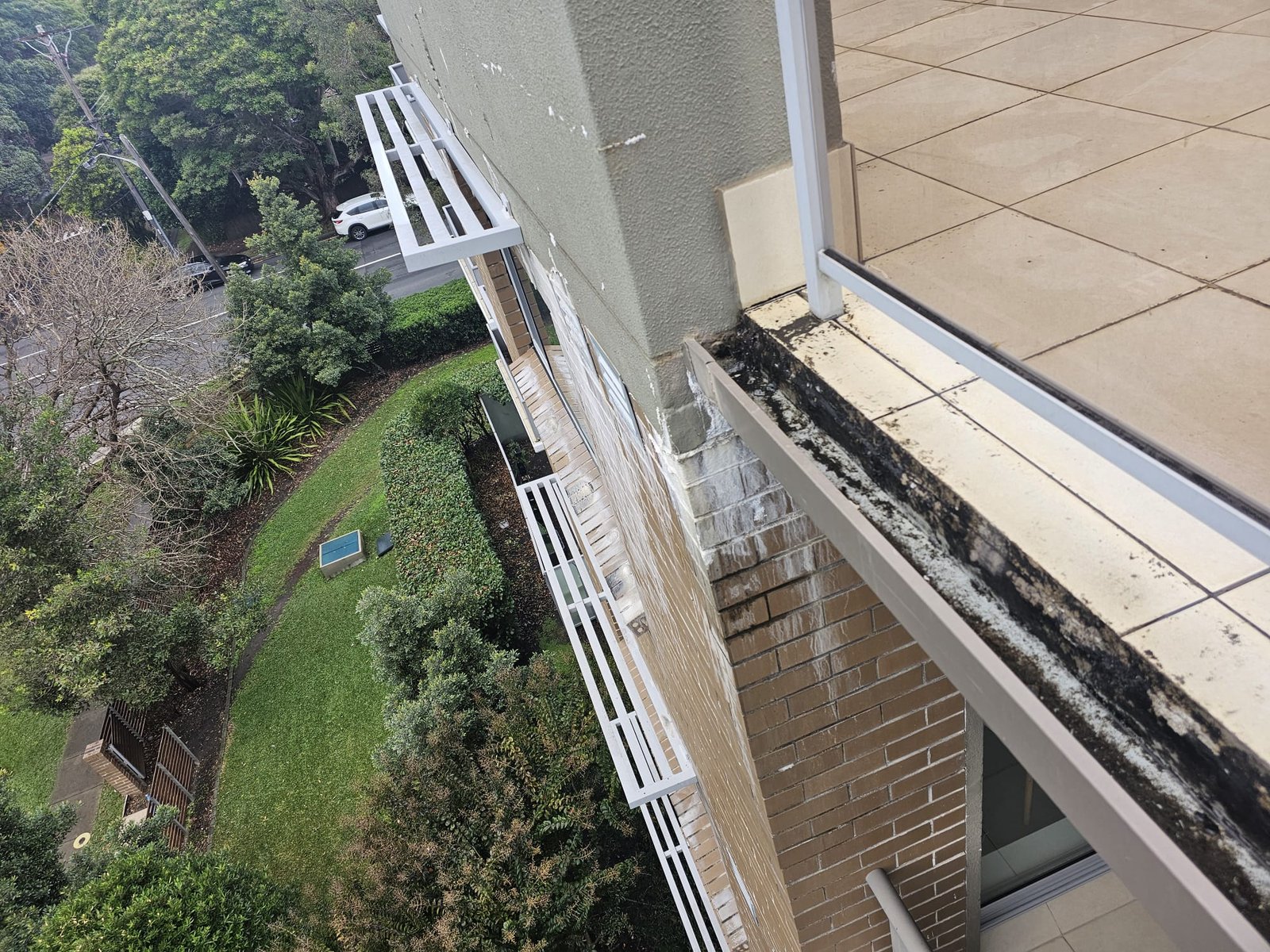
Tracing the Path Down the Facade
Our Process
From Enquiry to Remediation Guidance
A structured workflow built around how strata schemes actually make decisions.
01
Enquiry
The strata manager, committee member or building manager contacts us with the issue and access arrangements.
02
Site Investigation
A full diagnostic using the technology suited to the building type and suspected leak source — including drone inspection where access is restricted.
03
Report to Committee / Insurer
Written findings with imagery, root cause and a recommended remediation approach — supporting insurance claims and contractor briefing.
04
Remediation Guidance
Where appropriate, a quote or scope of works is provided for the committee's review.
FAQs
Strata Leak Detection — Common Questions
Who is responsible for common property leaks in a strata scheme?
Under most state strata legislation, the owners corporation is generally responsible for maintaining and repairing common property, which includes many building elements where leaks originate — though responsibility can vary depending on the specific cause and location. Committees should confirm with their strata manager or legal adviser for their specific scheme.
How do you find a leak without opening walls or ceilings?
We use non-invasive diagnostic tools — acoustic leak detection, tracer gas, thermal imaging and moisture meters — to pinpoint the leak source before any building fabric is opened, minimising cost and disruption to residents.
Can your reports be used to support a strata insurance claim?
Yes — our reports are structured with photographic and thermal evidence and a clear description of findings, suitable for submission to the strata insurer or loss adjuster.
How long does a strata leak investigation take?
Most on-site investigations are completed within a single visit, with the written report following within 24–48 hours, though complex or multi-source leaks may require a second visit.
Do you provide drone inspections for high or hard-to-access areas?
Yes — drone-assisted inspection is available for roofs, high balconies and other height-restricted areas of strata buildings.
Get a Free Quote
Request a Free Quote
Tell us what’s going on and we’ll get back to you with next steps — usually the same day. Prefer to talk it through first?
Servicing strata schemes across the full Greater Sydney metropolitan area.